A National Movement Built on Urgency, Experience, and Science




A National Movement Built on Urgency, Experience, and Science
Bill would create a DEA registration enabling physicians to treat eligible patients with qualifying Schedule I investigational drugs under federal Right to Try law
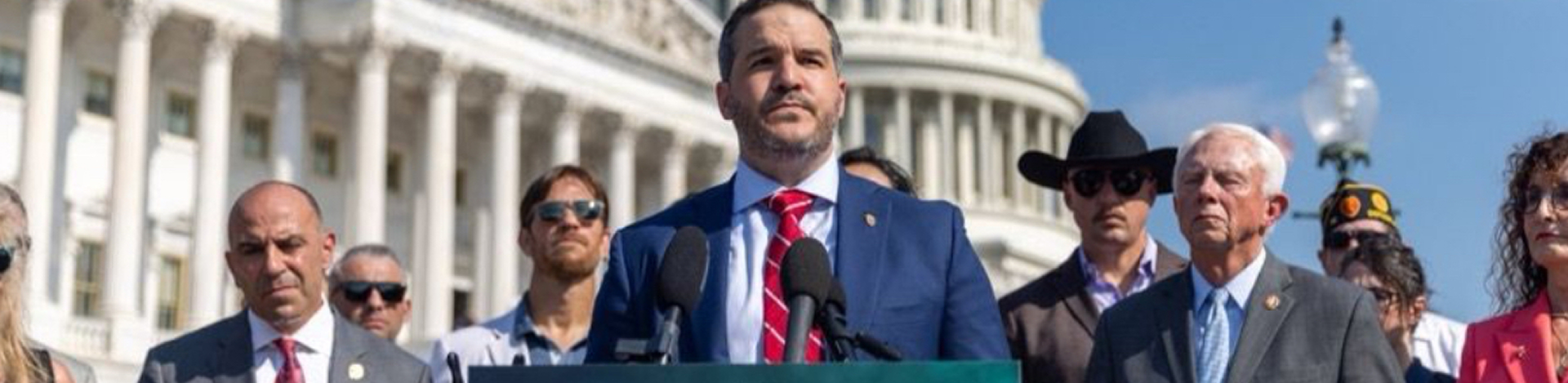
December 2025 (Washington, D.C.) – Today, U.S. Senators Cory Booker (D-NJ) and Rand Paul (R-KY), and Representatives Madeleine Dean (D-PA), Nancy Mace (R-SC), Lou Correa (D-CA), Dan Crenshaw (R-TX), Ro Khanna (D-CA), Morgan Luttrell (R-TX), Ted Lieu (D-CA), and Jack Bergman (R-MI), introduced the Freedom to Heal Act of 2025 (FTHA). This bipartisan legislation addresses a critical barrier that has prevented eligible patients, particularly Veterans, from accessing potentially lifesaving investigational therapies under the federal Right to Try (RTT) Act.
The FTHA creates a narrowly tailored DEA registration process exclusively for physicians to treat RTT-eligible patients in clinical settings with qualifying Schedule I investigational therapies — such as MDMA and psilocybin – without changing the underlying RTT law.
Under Right to Try, patients with life-threatening conditions who exhaust approved treatments and cannot join clinical trials may work with their physician to access “eligible investigational drugs” (EIDs) that have completed Phase I safety trials and remain under active development. RTT removes the FDA from the patient-physician decisionmaking process for “compassionate use” of these investigational drugs.
However, because the 2018 RTT Act did not amend the Controlled Substances Act (CSA), the Drug Enforcement Administration (DEA) claims it lacks a legal mechanism to register physicians to administer Schedule I EIDs — effectively blocking access to therapies that otherwise fully qualify under RTT. In recent years, this legal barrier has become increasingly problematic, as several Schedule I psychedelic therapies have demonstrated extraordinary promise for treating serious mental health and neurological conditions:
The Freedom to Heal Act addresses a barrier which has already contributed to thousands of eligible patients – including Veterans with PTSD or TBI, terminal cancer patients with severe end-of-life anxiety, and individuals with treatment-resistant suicidal depression or addiction – either traveling abroad or seeking underground treatment in the United States. The bill’s introduction follows the recent passage of the HALT Fentanyl Act, which reduced barriers to Schedule I research but did not address the Right to Try blockage.
“We believe Congress should act with urgency to pass the Freedom to Heal Act. It is clearly wrong and immoral that Veterans are leaving the country they selflessly served to access potentially lifesaving treatments that should already be available within our borders under Right to Try. Lives are on the line. Let’s act now,” said Martin R. Steele, Lieutenant General, USMC (Ret.), President of the Veteran Mental Health Leadership Coalition (VMHLC) and CEO of Reason for Hope.
“As someone currently leading a clinical trial of psilocybin to treat Veterans with PTSD, I know firsthand the significant number reaching out for help but who don’t qualify for our trial for various reasons. Unfortunately, it is often those most in need who are excluded. We must do more to help those individuals with life-threatening conditions who are out of options. The Freedom to Heal Act is a common-sense way to restore the intent of Right to Try and give patients a safe, legal path to pursue promising investigational therapies under medical supervision,” said Dr. Lynnette Averill, Chief Science Officer, Reason for Hope, Associate Professor at Baylor College of Medicine, and Director of Research, The Menninger Clinic.
“I served as an infantry officer during some of the heaviest fighting in Iraq, and I came home carrying trauma that traditional care simply couldn’t reach. For more than a decade, I did everything the system asked of me—talk therapy, surgeries, pharmaceuticals—and I still found myself out of options. I even applied for an MDMA-assisted therapy trial and was denied because my condition was considered too severe. In the end, the only path left was to leave the very country I served just to access psychedelic-assisted therapy, and it saved my life. I was fortunate, but no Veteran should ever have to take such drastic measures to find healing. Thousands of others—including many within our coalition—face the same impossible barriers, and that’s why we’re grateful for the leaders in Congress who are stepping forward with the Freedom to Heal Act to finally end this injustice” said Gary Hess, Director of Advocacy and Peer Support, VMHLC.
“It is hard to believe that federal law continues to block patients most in need – those with terminal or life threatening conditions – from accessing our most promising investigational mental health treatments under Right to Try. The Freedom to Heal Act proposes a narrow, targeted solution to the Schedule 1 barrier, while ensuring DEA maintains its desired oversight. We thank the Congress members championing this issue, and hope Congress will work with the White House and DEA to quickly fix this obvious problem,” said Brett Waters, Esq., Executive Director, Reason for Hope and Policy Counsel for VMHLC.
“As a coalition representing leading professional and patient organizations concerned with brain health, we recognize the need to balance additional research with access to promising treatments for those most in need. The Freedom to Heal Act will ensure the compassionate policy underlying Right to Try extends to some of our most promising investigational treatments for mental and neurological health conditions,” said Katie Sale, Executive Director of the American Brain Coalition.
“I’m a Veteran who works every day with the organizations in this coalition, and I see firsthand the consequences of delay. Veterans and patients with life-threatening conditions are not asking for shortcuts; they’re asking for a safe, medically supervised path to treatments that already show extraordinary promise in research and real-world evidence. The Freedom to Heal Act does more than fix a legal gap; it restores the intent of Right to Try and brings this care back under U.S. physicians, rather than forcing Americans to seek it elsewhere. We’re grateful to the bipartisan leaders who recognize both the urgency and the opportunity before us,” said Adam Marr, Director of Operations, VMHLC.
The FTHA is supported by a broad coalition of Veterans’ groups, clinicians, researchers, and patient-advocacy organizations including:
Reason for Hope is a nonprofit organization dedicated to preventing deaths of despair and improving the well-being of those suffering from mental and behavioral health conditions. The organization’s work focuses on expanding safe and equitable access to psychedelic and other emerging therapies through education, research, policy development, and advocacy. Reason for Hope’s co-founders and leadership team are united by the loss of loved ones to suicide. Learn more at reasonforhope.org.
VMHLC unites Veterans, family members, clinicians, researchers, allies, and mission-aligned partner organizations on the front lines of the battle to improve Veterans’ mental health and prevent suicide. Through education, research, advocacy, and community partnerships, VMHLC works to expand access to breakthrough and emerging treatments such as psychedelic therapies and accelerated TMS, alongside a mix of supportive services that drive meaningful healing rooted in science, compassion, and lived experience. VMHLC recognizes that healing is rarely linear and there’s no one-size-fits-all solution for everyone. We need better research and novel tools to help our Veterans and family members not only survive, but thrive. To learn more, visit www.vmhlc.org.