A National Movement Built on Urgency, Experience, and Science




A National Movement Built on Urgency, Experience, and Science
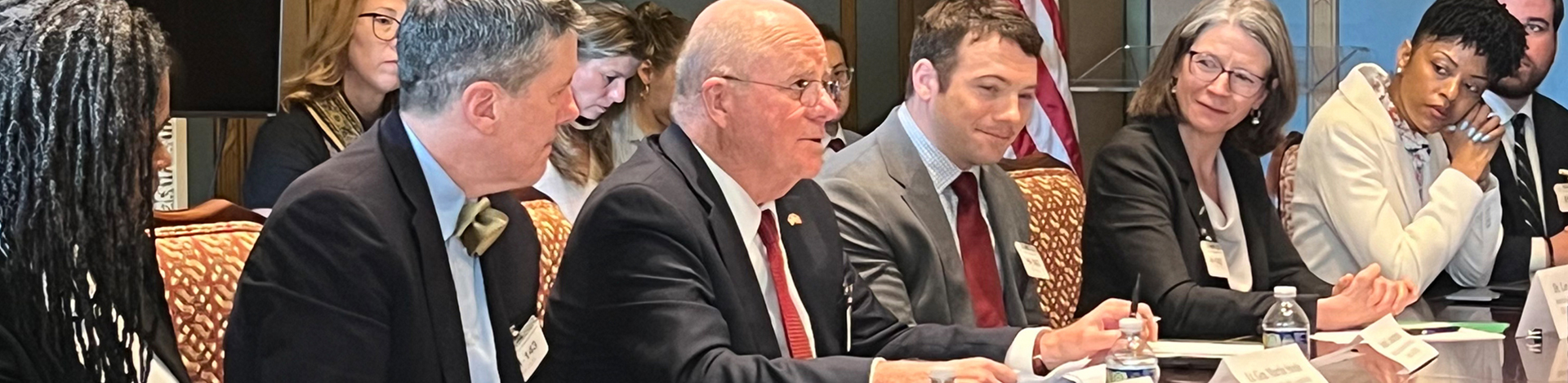
The Freedom to Heal Act is rooted in a simple belief:
If there is a reasonable chance a treatment can save a life or bring someone back to themselves, they deserve the right to try it—here at home, under the care of a qualified physician.
Every day in America, Veterans and trauma survivors are dying—not because treatments don’t exist, but because they can’t access them.


Because these therapies are still Schedule I substances under the Controlled Substances Act, the DEA currently has no mechanism to allow doctors to use them under Right to Try—even when patients qualify under federal law.
The Freedom to Heal Act fixes that gap—without changing the underlying law or rescheduling any drug.
The Freedom to Heal Act is a bipartisan and bicameral federal bill that would allow qualified physicians to offer eligible investigational therapies—such as MDMA and Psilocybin—to eligible patients under the existing federal Right to Try law.
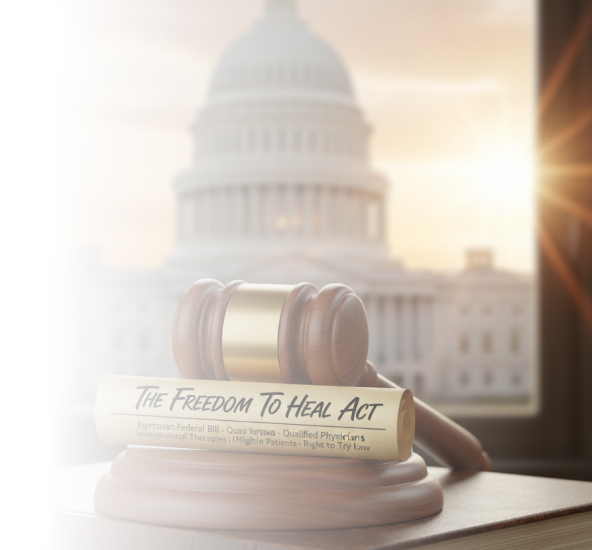
The bill is intentionally narrow, focused, and safety-driven. It:
Allows licensed, qualified physicians to obtain a special registration from the DEA to administer eligible investigational therapies (like MDMA, psilocybin, ibogaine) under Right to Try.
This includes Veterans and civilians facing conditions that carry a serious risk of death—such as severe PTSD with suicidality, severe substance use disorders, and certain terminal diagnoses.
The federal Right to Try Act—passed in 2018—already allows eligible patients to access certain investigational drugs that have completed Phase I trials, outside of traditional clinical trial pathways.
The Freedom to Heal Act simply ensures that Schedule I breakthrough therapies can be used when a patient qualifies—rather than being blocked by Controlled Substances Act technicalities.
Therapies must be delivered in a controlled, clinical setting with appropriate medical supervision, protocols for safety, and measures to prevent diversion.
This is not broad legalization. It does not change drug schedules, open dispensaries, or authorize recreational use. It is a targeted medical access pathway for the most at-risk patients.
The Freedom to Heal Act is designed for people who have run out of options under the current system:

Veterans who’ve exhausted every VA option and remain at high risk of suicide or overdose

Trauma survivors who are too complex or “high risk” for clinical trials, but still desperately need treatment
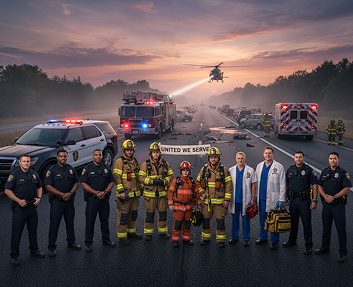
First responders, law enforcement, and medical personnel carrying moral injury and life-threatening levels of PTSD

End-of-life patients facing crippling anxiety, depression, or existential distress

Americans of all backgrounds who are out of options, but not yet out of hope
“These are not theoretical patients. They are our neighbors, spouses, parents, children, and friends and family.”
You can help move this from idea to reality:

Whether you’re a Veteran, clinician, policymaker, or ally—there’s a role for you here.

Connect with fellow advocates and drive change.

Fuel the mission. Fund access, advocacy, and hope.

Volunteer, attend events, or share your story.
VMHLC is powered by a national coalition of Veteran-led organizations, clinicians, researchers, advocates, and families—united in one mission: to end the suicide crisis and revolutionize mental health care.








“We are Veterans still in service—fighting for the right to heal.”